

មគ្គុទ្ទេសក៍ជួញដូរ
របៀបជ្រើសរើសឈ្មួញកណ្តាល Forex: បញ្ជីត្រួតពិនិត្យ 2026 សម្រាប់ពាណិជ្ជករ
បញ្ជីត្រួតពិនិត្យជាក់ស្តែង 2026 សម្រាប់ការជ្រើសរើសឈ្មួញកណ្តាល Forex បទប្បញ្ញត្តិ ការរីករាលដាល ការប្រតិបត្តិ ឧបករណ៍វេទិកា និងលក្ខខណ្ឌនៃការដកប្រាក់។ គ្មានការបំផ្លើស គ្មានការបំផ្លើស។

ការជ្រើសរើសឈ្មួញកណ្តាលខុស ធ្វើឱ្យអ្នកចំណាយច្រើនជាងការរីករាលដាល។ ការពិនិត្យឡើងវិញឆ្នាំ 2024 FCA បានរកឃើញថាជាង 75% នៃពាក្យបណ្តឹងរបស់អតិថិជនលក់រាយប្រឆាំងនឹងក្រុមហ៊ុនដែលមិនមានការគ្រប់គ្រងមិនបានដោះស្រាយ ហើយពាណិជ្ជករទាំងនោះបានបាត់បង់ទាំងប្រាក់បញ្ញើរបស់ពួកគេ និងដំណោះស្រាយផ្លូវច្បាប់ណាមួយ។ នៅចុងបញ្ចប់នៃបញ្ជីត្រួតពិនិត្យនេះ អ្នកនឹងអាចពិនិត្យរកឈ្មួញកណ្តាលបានឆ្លងកាត់បទប្បញ្ញត្តិ ការអនុវត្ត ការចំណាយ និងលក្ខខណ្ឌនៃការដកប្រាក់ក្នុងរយៈពេលតិចជាង 30 នាទី។ យើងគ្របដណ្តប់តម្រងទាំងប្រាំដែលបំបែកបរិយាកាសពាណិជ្ជកម្មប្រកបដោយវិជ្ជាជីវៈពីដៃគូដែលធ្វើពាណិជ្ជកម្មប្រឆាំងនឹង P&L របស់អ្នក។
បទប្បញ្ញត្តិ៖ តម្រងមិនអាចចរចារបានតែមួយគត់
មុនពេលដែលអ្នកប្រៀបធៀបការរីករាលដាល វេទិកា ឬកម្រិតអានុភាព សូមពិនិត្យមើលអាជ្ញាប័ណ្ណ។ និយតកររបស់ឈ្មួញកណ្តាលកំណត់ថាតើមូលនិធិរបស់អ្នកនៅរស់រានមានជីវិតដែរឬទេ ប្រសិនបើក្រុមហ៊ុនស្ថិតនៅក្រោមការគ្រប់គ្រង និងថាតើអ្នកមានផ្លូវដែលអាចទុកចិត្តបានសម្រាប់ការដោះស្រាយវិវាទនៅពេលដែលមានអ្វីមួយខុសប្រក្រតី។ អ្វីផ្សេងទៀតគឺអាចចរចារបាន។ បទប្បញ្ញត្តិគឺមិនមែនទេ។
អ្វីដែលបទប្បញ្ញត្តិលំដាប់ទី 1 មានន័យយ៉ាងពិតប្រាកដ
និយតករកម្រិត 1 អនុវត្តច្បាប់ស្តីពីភាពគ្រប់គ្រាន់នៃដើមទុនដ៏តឹងរឹង ការបែងចែកមូលនិធិអតិថិជនជាកាតព្វកិច្ច និងការរាយការណ៍ជាប្រចាំ។ ពួកគេក៏ទាមទារការការពារសមតុល្យអវិជ្ជមានផងដែរ មានន័យថាអ្នកមិនអាចបាត់បង់លើសពីសមតុល្យគណនីរបស់អ្នកបានទេ សូម្បីតែនៅក្នុងចន្លោះទីផ្សារខ្លាំងក៏ដោយ។ ប្រសិនបើឈ្មួញកណ្តាលបរាជ័យក្នុងពេលកាន់លុយរបស់អ្នក របបលំដាប់ទី 1 ជាធម្មតាដាក់ប្រាក់បញ្ញើរបស់អតិថិជនពីដើមទុនប្រតិបត្តិការរបស់ក្រុមហ៊ុន ដោយផ្តល់ឱ្យអ្នកនូវការទាមទារដ៏រឹងមាំក្នុងការស្តារឡើងវិញពេញលេញ។
និយតករសំខាន់ៗ និងអ្វីដែលពួកគេត្រូវការ
និយតករយុត្តាធិការ តម្រូវការគន្លឹះ CySEC, ការចុះឈ្មោះវិជ្ជាជីវៈរបស់ ASIC ឬមូលដ្ឋានទិន្នន័យ BASIC របស់ NFA ។ ពិនិត្យមើលថាអាជ្ញាប័ណ្ណគឺ បច្ចុប្បន្ន ហើយថាឈ្មោះអង្គភាពត្រូវគ្នាយ៉ាងពិតប្រាកដ។ ភាពមិនស៊ីសង្វាក់គ្នានៃពាក្យតែមួយអាចផ្តល់សញ្ញាដល់ក្រុមហ៊ុនដែលបានក្លូន។
Offshore Trap និងអ្វីដែល "Passporting" មានន័យថា
ឈ្មួញកណ្តាលដែលគ្មានការគ្រប់គ្រង ឬ "Offshore" ដែលជារឿយៗកាន់កាប់ការចុះឈ្មោះពី Vanuatu, Seychelles ឬ British Virgin Islands អាចផ្តល់នូវអានុភាពខ្ពស់ និងមិនមានតម្រូវការរាយការណ៍ ប៉ុន្តែពួកគេក៏ផ្តល់ការការពារអតិថិជនផងដែរ។ ប្រសិនបើពួកគេបង្កកការដកប្រាក់ ឬបាត់ អ្នកមិនមាននិយតករដើម្បីប្តឹងតវ៉ាទេ។ នៅក្នុងសហភាពអឺរ៉ុប លិខិតឆ្លងដែន អនុញ្ញាតឱ្យឈ្មួញកណ្តាលដែលមានអាជ្ញាប័ណ្ណនៅក្នុងរដ្ឋសមាជិកតែមួយ (ឧ. CySEC in Cyprus) ដើម្បីផ្តល់សេវាកម្មនៅទូទាំងប្រទេសសហភាពអឺរ៉ុបទាំងអស់ដោយគ្មានអាជ្ញាប័ណ្ណដាច់ដោយឡែក។ វាស្របច្បាប់ ប៉ុន្តែប្រសិនបើនិយតករផ្ទះអនុវត្តច្បាប់ ESMA ប៉ុណ្ណោះ។ ឈ្មួញកណ្តាលដែលអះអាងថាត្រូវបាន "គ្រប់គ្រងនៅអឺរ៉ុប" ដោយមិនបញ្ចេញឈ្មោះអាជ្ញាធរមានសមត្ថកិច្ចជាក់លាក់គឺជាទង់ក្រហម។
ឈ្មួញកណ្តាលដែលមានការគ្រប់គ្រងមិនអាចការពារការខាតបង់បានទេ។ ប៉ុន្តែវាអាចធានាថានៅពេលពាណិជ្ជកម្មមានបញ្ហា ការបាត់បង់របស់អ្នកនឹងឈប់នៅសមតុល្យគណនីរបស់អ្នក ហើយប្រាក់របស់អ្នកមិនត្រូវបានចាត់ទុកជាដើមទុនធ្វើការរបស់ក្រុមហ៊ុននោះទេ។
ការរីករាលដាល កម្រៃជើងសារ និងតម្លៃពិតប្រាកដនៃពាណិជ្ជកម្មមួយ
ការរីករាលដាលរវាងការដេញថ្លៃ និងតម្លៃសួរ គឺជាការចំណាយដែលអាចមើលឃើញច្រើនបំផុតដែលអ្នកបង់ក្នុងមួយពាណិជ្ជកម្ម ប៉ុន្តែវាកម្រមានតែមួយគត់។ ការយល់ដឹងពីរបៀបដែលការរីករាលដាលឆៅ កម្រៃជើងសារ និងថ្លៃសេវាលាក់កំបាំងកំណត់ថាតើយុទ្ធសាស្រ្តរបស់អ្នករស់រានមានជីវិតបន្ទាប់ពីការចំណាយ។
ការរីករាលដាលឆៅធៀបនឹងការរីករាលដាលថេរ
ការរីករាលដាលឆៅ គឺជាការរីករាលដាលទីផ្សារអន្តរធនាគារ ចម្ងាយជាក់ស្តែងរវាងការដេញថ្លៃ និងសួរ មុនពេលឈ្មួញកណ្តាលបន្ថែមការសម្គាល់ណាមួយ។ ពួកវាប្រែប្រួលជាមួយនឹងសាច់ប្រាក់ងាយស្រួល ដោយបង្ហាប់ទៅ 0.1–0.3 pip នៅលើ EUR/USD GBP/USD និង USD/JPY ក្នុងអំឡុងពេលកំពូលទីក្រុងឡុងដ៍ និងញូវយ៉កត្រួតលើគ្នា និងការពង្រីកអំឡុងពេលមានលំហូរសាច់ប្រាក់ទាបដូចថ្ងៃសុក្រ។ ការរីករាលដាលត្រូវបានកំណត់ដោយឈ្មួញកណ្តាលដោយមិនគិតពីលក្ខខណ្ឌទីផ្សារ។ ពួកវាផ្តល់នូវការព្យាករណ៍ ដែលមានប្រយោជន៍ក្នុងអំឡុងពេលព្រឹត្តិការណ៍ព័ត៌មាន នៅពេលដែលការរីករាលដាលឆៅអាចកើនឡើងដល់ 2-3 pips ប៉ុន្តែចំនួនថេរគឺស្ទើរតែតែងតែធំជាងការរីករាលដាលឆៅជាមធ្យមនៅក្នុងលក្ខខណ្ឌរាវ។ ការរីករាលដាល 1.2-pip ថេរ EUR/USD ចំណាយច្រើនជាងការរីករាលដាល 0.2-pip ឆៅ 90% នៃពេលវេលា។
គំរូកម្រៃជើងសារ៖ ថ្លៃសេវាផ្ទះល្វែងក្នុងមួយឡូតិ៍ធៀបនឹងការរីករាលដាលតែប៉ុណ្ណោះ
ឈ្មួញកណ្តាលជាធម្មតាប្រើរចនាសម្ព័ន្ធមួយក្នុងចំនោមរចនាសម្ព័ន្ធ
Raw spread + commission (ECN/STP)៖ ឈ្មួញកណ្តាលឆ្លងកាត់ការរីករាលដាលឆៅ និងគិតថ្លៃផ្ទះល្វែងក្នុងមួយឡូតិ៍។ អត្រាតម្លៃធម្មតា៖ $3.50 ក្នុងមួយចំហៀងក្នុងមួយឡូតិ៍ស្តង់ដារ (100k units) ឬ $7 round-turn round-turn$9 (0.4 pip × $10 per pip + $7) Spread-only1.0 pip$0$10 (1.0 pip × $10 per pip × 1 lot)
ម៉ូដែលស្ប៉ាឆៅសន្សំបាន 1 ដុល្លារក្នុងមួយជុំលើគូនេះ។ គុណនឹងការជួញដូរ 20–50 ក្នុងមួយថ្ងៃ ហើយភាពខុសគ្នាគឺជាសម្ភារៈ។
ថ្លៃដើមលាក់ដែលស៊ីចូលក្នុងគណនីរបស់អ្នក
អត្រាប្តូរប្រាក់ / វិលជុំ៖ ភាពខុសគ្នាការប្រាក់រវាងរូបិយប័ណ្ណទាំងពីរក្នុងគូមួយ ដោយគិតថ្លៃ ឬបញ្ចូលប្រាក់នៅម៉ោង 5:00 PM EST ប្រចាំថ្ងៃ។ ពាណិជ្ជករ swing ដែលកាន់មុខតំណែងជាច្រើនថ្ងៃ ឬច្រើនសប្តាហ៍អាចឃើញការចំណាយលើការផ្លាស់ប្តូរលើសពីការរីករាលដាលនៃធាតុចូល។ ពិនិត្យមើលថាតើឈ្មួញកណ្តាលផ្តល់ជូនគណនីឥស្លាម (ដោយមិនមានការប្តូរ) ប្រសិនបើយុទ្ធសាស្ត្រ ឬជំនឿរបស់អ្នកទាមទារ។
ថ្លៃអសកម្ម៖ ឈ្មួញកណ្តាលមួយចំនួនដកថ្លៃសេវាប្រចាំខែបន្ទាប់ពី 90-180 ថ្ងៃនៃការគ្មានសកម្មភាពជួញដូរ។ Scalpers ដែលធ្វើពាណិជ្ជកម្មប្រចាំថ្ងៃកម្របង្កឱ្យមានរឿងនេះ។ ពាណិជ្ជករទីតាំងរយៈពេលវែងដែលចូលម្តងក្នុងមួយសប្តាហ៍គួរតែផ្ទៀងផ្ទាត់គោលការណ៍។
ថ្លៃបំប្លែងរូបិយប័ណ្ណ៖ ប្រសិនបើអ្នកដាក់ប្រាក់ USD ប៉ុន្តែធ្វើពាណិជ្ជកម្មគណនីដែលកំណត់ដោយអឺរ៉ូ (ឬផ្ទុយមកវិញ) ឈ្មួញកណ្តាលបំប្លែងក្នុងអត្រាដែលរួមបញ្ចូលសញ្ញាសម្គាល់ដែលលាក់ជាញឹកញាប់ 0.5%–1% ។ ការដាក់ប្រាក់ និងធ្វើពាណិជ្ជកម្មក្នុងរូបិយប័ណ្ណដូចគ្នា ដើម្បីជៀសវាងបញ្ហានេះ។
ត្រូវគ្នានឹងរចនាសម្ព័ន្ធថ្លៃដើមទៅនឹងរចនាប័ទ្មរបស់អ្នក
អ្នកជំនួញ Scalpers និងអ្នកជួញដូរថ្ងៃ គួរតែផ្តល់អាទិភាពដល់ការរីករាលដាលទាប និងកម្រៃជើងសារទាបជាងអ្វីទាំងអស់ អត្រាប្តូរប្រាក់មិនសំខាន់ទេ នៅពេលមុខតំណែងបិទក្នុងរយៈពេលប៉ុន្មាននាទី។ ម៉ូដែល ECN/STP ជាមួយនឹងការរីករាលដាលឆៅ និងកម្រៃជើងសារក្នុងមួយឡូតគឺសមត្រឹមត្រូវ។
ពាណិជ្ជករប្តូរប្រាក់ និងអ្នកជួញដូរទីតាំង គួរតែផ្តោតលើអត្រាប្តូរប្រាក់ និងថ្លៃអសកម្ម។ ឈ្មួញកណ្តាលដែលផ្តល់អត្រាការភ្នាល់វិលជុំប្រកួតប្រជែង (ឬគណនីដែលមិនមានការប្តូរ) ហើយគ្មានថ្លៃអសកម្មគឺសំខាន់ជាងការកាត់ 0.1 pips ចេញពីការរីករាលដាលនៅពេលចូល។
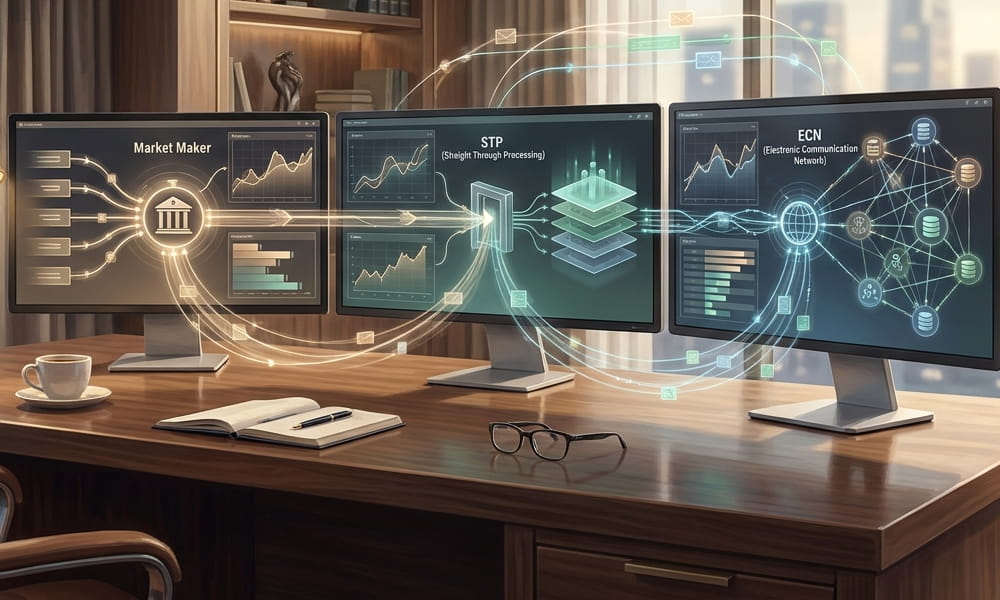
គំរូប្រតិបត្តិ៖ អ្នកបង្កើតទីផ្សារ STP ឬ ECN?
គំរូប្រតិបត្តិដែលឈ្មួញកណ្តាលប្រើកំណត់ពីរបៀបដែលការបញ្ជាទិញរបស់អ្នកត្រូវបានបញ្ជូន បំពេញ និងតម្លៃ។ វាប៉ះពាល់ដោយផ្ទាល់ទៅលើការដកស្រង់ ការរអិល និងថាតើឈ្មួញកណ្តាលរបស់អ្នកមានទំនាស់ផលប្រយោជន៍នៅក្នុងលទ្ធផលពាណិជ្ជកម្មរបស់អ្នកដែរឬទេ។ មានគំរូសំខាន់ៗចំនួនបី។
អ្នកបង្កើតទីផ្សារ (Dealing Desk)
អ្នកបង្កើតទីផ្សារបង្កើតក្រុមសាច់ប្រាក់ងាយស្រួលរបស់ខ្លួន ហើយទទួលយកផ្នែកម្ខាងនៃពាណិជ្ជកម្មរបស់អ្នក។ នៅពេលអ្នកទិញ EUR/USD ឈ្មួញកណ្តាលនឹងលក់វាឱ្យអ្នកពីសារពើភ័ណ្ឌផ្ទាល់ខ្លួនរបស់វា។ វាបង្កើត ទំនាស់ផលប្រយោជន៍ ឈ្មួញកណ្តាលចំណេញនៅពេលអ្នកបាត់បង់លុយ។ ក្នុងអំឡុងពេលព្រឹត្តិការណ៍ដែលមានការប្រែប្រួលខ្លាំងដូចជាការចេញផ្សាយ NFP ឬការសម្រេចចិត្តលើអត្រាការប្រាក់របស់ធនាគារកណ្តាល អ្នកបង្កើតទីផ្សារតែងតែពង្រីកការរីករាលដាលយ៉ាងខ្លាំង ឬចេញការដកស្រង់ឡើងវិញ ដោយសារតែតុដោះស្រាយនៅក្នុងផ្ទះរបស់ពួកគេយល់ព្រមលើការបំពេញនីមួយៗដោយដៃ។ ការរអិលអាចមានភាពធ្ងន់ធ្ងរ និងជាប់លាប់ប្រឆាំងនឹងពាណិជ្ជករ។
STP (Straight-Through Processing)
ឈ្មួញកណ្តាល STP ផ្ញើការបញ្ជាទិញរបស់អ្នកដោយផ្ទាល់ទៅកាន់អ្នកផ្តល់សាច់ប្រាក់ដោយមិនមានការអន្តរាគមន៍ពីអ្នកចែកបៀ។ ការបញ្ជាទិញត្រូវបានផ្គូផ្គងដោយស្វ័យប្រវត្តិ ដែលលុបបំបាត់ការដកស្រង់ឡើងវិញ និងកាត់បន្ថយការរអិល។ ឈ្មួញកណ្តាលរកបានតាមរយៈ ការសម្គាល់លើការរីករាលដាល ជាជាងការភ្នាល់ប្រឆាំងនឹងអ្នក។ STP គឺជាមូលដ្ឋានកណ្តាល ការបំពេញលឿនជាងតុចរចា ប៉ុន្តែការរីករាលដាលអាចនៅតែពង្រីកក្នុងអំឡុងពេលព្រឹត្តិការណ៍ព័ត៌មាន ដោយសារអ្នកផ្តល់សាច់ប្រាក់ងាយស្រួលកែសម្រួលតម្លៃរបស់ពួកគេ។
ECN (បណ្តាញទំនាក់ទំនងអេឡិចត្រូនិក)
ឈ្មួញកណ្តាល ECN ប្រមូលសម្រង់ពីធនាគារជាច្រើន និងអ្នកផ្តល់សាច់ប្រាក់ងាយស្រួលតាមស្ថាប័នទៅក្នុងសៀវភៅលំដាប់កណ្តាល។ ការបញ្ជាទិញនិងលក់របស់អ្នកត្រូវបានផ្គូផ្គងដោយអនាមិកប្រឆាំងនឹងអ្នកចូលរួមផ្សេងទៀត។ លទ្ធផលគឺ ការរីករាលដាលដ៏តឹងតែងបំផុត ដែលអាចរកបាន ប៉ុន្តែឈ្មួញកណ្តាលគិតថ្លៃកំរៃជើងសារថេរក្នុងមួយឡូតិ៍ (ជាធម្មតា $3–$7 round-turn) ជំនួសឱ្យការរីករាលដាល។ ការប្រតិបត្តិ ECN មិនមានអន្តរាគមន៍ផ្នែកដោះស្រាយទេ ដូច្នេះការដកស្រង់ឡើងវិញស្ទើរតែត្រូវបានលុបចោល។ ការរអិលនៅតែអាចកើតឡើងក្នុងអំឡុងពេលមានការប្រែប្រួលខ្លាំង ប៉ុន្តែជាទូទៅវាមានទំហំតូចជាង ហើយអាចដំណើរការតាមការពេញចិត្តរបស់ពាណិជ្ជករ។
តើគំរូមួយណាដែលសមនឹងរចនាប័ទ្មពាណិជ្ជកម្មរបស់អ្នក? ល្បឿន និងអវត្តមាននៃការដកស្រង់ឡើងវិញគឺចាំបាច់សម្រាប់រយៈពេលខ្លី។ ទទួលយកកម្រៃជើងសារជាការដោះដូរសម្រាប់ការរីករាលដាលកាន់តែតឹងរ៉ឹង។
ពាណិជ្ជករប្តូរទីតាំង STP ឬអ្នកបង្កើតទីផ្សារល្បីឈ្មោះ។ ការរីករាលដាលកាន់តែធំមានសារសំខាន់តិចជាងការរក្សាទុករយៈពេលច្រើនថ្ងៃ ប៉ុន្តែពិនិត្យមើលថាគោលការណ៍ប្រតិបត្តិរបស់ឈ្មួញកណ្តាលបានចែងយ៉ាងច្បាស់ថាមិនមានការអន្តរាគមន៍លើតុដោះស្រាយក្នុងអំឡុងពេលព្រឹត្តិការណ៍ព័ត៌មាន។
ពាណិជ្ជករថ្មី, STP ។ អ្នកជៀសវាងជម្លោះផលប្រយោជន៍នៅក្នុងអ្នកបង្កើតទីផ្សារ ខណៈពេលដែលរក្សារចនាសម្ព័ន្ធចំណាយសាមញ្ញ (មិនមានការគណនាកម្រៃជើងសារ)។
ពិនិត្យមើល ការបង្ហាញគោលការណ៍ប្រតិបត្តិ របស់ឈ្មួញកណ្តាលនៅលើគេហទំព័ររបស់ពួកគេ។ រកមើលភាសាអំពីតក្កកម្មនៃការបញ្ជាទិញ ការរអិលអតិបរិមាក្នុងអំឡុងពេលព័ត៌មាន និងថាតើឈ្មួញកណ្តាលដំណើរការតុដោះស្រាយក្នុងអំឡុងពេលវគ្គជាក់លាក់ដែរឬទេ។ ឈ្មួញកណ្តាលដែលបដិសេធមិនបង្ហាញគំរូរបស់វាក្នុងន័យធម្មតាគឺជាទង់ក្រហម។

វេទិកា និងឧបករណ៍៖ MT4, MT5 និងលើសពី
វេទិកានេះគឺជាកន្លែងដែលអ្នកប្រតិបត្តិរាល់ការជួញដូរ ដូច្នេះវាសមនឹងទទួលបានការត្រួតពិនិត្យច្រើនជាងសោភ័ណភាពគណនីសាកល្បង។ នេះជាអ្វីដែលត្រូវពិនិត្យមុនពេលចេញដើមទុនបន្តផ្ទាល់។
MT4 ទល់នឹង MT5៖ តើមួយណាសមនឹងរចនាប័ទ្មរបស់អ្នក? វាគាំទ្រស៊ុមពេលវេលាចំនួន 9 ប្រភេទការបញ្ជាទិញដែលមិនទាន់សម្រេចចំនួន 4 និងប្រព័ន្ធអេកូដែលមានភាពចាស់ទុំនៃអ្នកប្រឹក្សាអ្នកជំនាញ (EAs) ស្គ្រីបពាណិជ្ជកម្មដោយស្វ័យប្រវត្តិដែលបានសរសេរនៅក្នុង MQL4 ។ កម្មវិធី backtester របស់វាគឺជាខ្សែតែមួយ ប៉ុន្តែអាចទុកចិត្តបានសម្រាប់យុទ្ធសាស្រ្តសាមញ្ញ។
MetaTrader 5 (MT5) បន្ថែម 21 ស៊ុមពេលវេលា 6 ប្រភេទការបញ្ជាទិញដែលមិនទាន់សម្រេច និងកម្មវិធីសាកល្បងយុទ្ធសាស្ត្រពហុខ្សែ ដែលដំណើរការលឿនជាងមុននៅលើ CPU ទំនើប។ MT5 គ្របដណ្ដប់លើប្រភេទទ្រព្យសកម្មជាច្រើនទៀតដែលមានដើមកំណើត ទីផ្សារ Forex ភាគហ៊ុន អនាគត ទំនិញ និងសន្ទស្សន៍ ហើយរួមបញ្ចូលទាំងប្រតិទិនសេដ្ឋកិច្ចដែលភ្ជាប់មកជាមួយ និងទិដ្ឋភាពជម្រៅនៃទីផ្សារ (DOM) ។ ការដោះដូរ៖ EAs ភាគីទីបីជាច្រើន និងសូចនាករដែលសរសេរសម្រាប់ MT4 មិនដំណើរការលើ MT5 ដោយមិនចាំបាច់សរសេរឡើងវិញទេ។ ប្រសិនបើអ្នកពឹងផ្អែកលើ EA ជាក់លាក់ សូមបញ្ជាក់ភាពឆបគ្នារបស់ MT5 មុនពេលប្តូរ។ រកមើលការជួញដូរដោយចុចតែម្តង (មិនមានការបញ្ជាក់លេចឡើង) គំនូសតាងកម្រិតខ្ពស់ជាមួយនឹងឧបករណ៍គូរ និងសូចនាករយ៉ាងហោចណាស់ 30 និងប្រតិទិនសេដ្ឋកិច្ចរួមបញ្ចូលគ្នាដែលបង្ហាញពីព្រឹត្តិការណ៍ដែលមានឥទ្ធិពលខ្ពស់រួមជាមួយការជួញដូរបើកចំហរបស់អ្នក។ ល្បឿននៃការប្រតិបត្តិនៅលើទូរសព្ទចល័តគួរតែត្រូវគ្នានឹងកំណែផ្ទៃតុ សាកល្បងការបំពេញការបញ្ជាទិញកំឡុងពេលវគ្គដែលមានការប្រែប្រួលខ្ពស់ មុនពេលផ្តល់មូលនិធិដល់គណនីបន្តផ្ទាល់។
ស្វ័យប្រវត្តិកម្ម៖ EAs, APIs, និង VPS
ពាណិជ្ជករស្វ័យប្រវត្តិត្រូវការរបស់បីយ៉ាង៖ (1) ការគាំទ្រ EA ពេញលេញនៅលើ MT4 ឬ ការធ្វើពាណិជ្ជកម្មតាមបែប MT4 ឬ nostrict classions ប្រេកង់ (2) API ដែលបានចងក្រងជាឯកសារ (REST ឬ FIX) សម្រាប់យុទ្ធសាស្ត្រក្បួនដោះស្រាយផ្ទាល់ខ្លួន និង (3) ជម្រើសម៉ាស៊ីនបម្រើឯកជននិម្មិតដែលមានភាពយឺតយ៉ាវទាប (VPS) តាមឧត្ដមគតិមិនគិតថ្លៃលើសពីសមតុល្យគណនីអប្បបរមា ឬបរិមាណប្រចាំខែ។ ពិនិត្យមើលថាតើឈ្មួញកណ្តាលដាក់កម្រិតលើការប្រើប្រាស់ EA ក្នុងអំឡុងពេលព្រឹត្តិការណ៍ព័ត៌មានឬអត់។ ខ្លះធ្វើបាន ហើយវាអាចបំបែកតក្កវិជ្ជារបស់មនុស្សយន្តដែលធ្វើមាត្រដ្ឋាន។
ហានិភ័យសំខាន់ៗ និងឧបករណ៍ប្រតិបត្តិ
បញ្ជីពិនិត្យនៃលក្ខណៈពិសេសវេទិកាដែលមិនអាចចរចារបាន៖
ការការពារសមតុល្យអវិជ្ជមាន ធានាថាអ្នកមិនជំពាក់ឈ្មួញកណ្តាលលើសពីប្រាក់បញ្ញើរបស់អ្នក។ ទាមទារនៅក្នុងយុត្តាធិការមួយចំនួន; ផ្ទៀងផ្ទាត់វាអនុវត្តចំពោះប្រភេទគណនីរបស់អ្នក។
ការបញ្ជាទិញបញ្ឈប់ការខាតបង់ដែលធានា (GSLOs) បំពេញក្នុងកម្រិតពិតប្រាកដដោយមិនគិតពីការរអិល ឬគម្លាត។ ជាធម្មតាមានការរីករាលដាលថ្លៃ ប៉ុន្តែសំខាន់សម្រាប់ការទទួលបានព័ត៌មានដែលមានផលប៉ះពាល់ខ្លាំង។ មានប្រយោជន៍សម្រាប់ពាណិជ្ជករដែលត្រូវការវាស់កម្រាស់សៀវភៅបញ្ជាមុននឹងចូលមុខតំណែងធំៗ។
ការជូនដំណឹងអំពីការគ្រប់គ្រងហានិភ័យ ជំរុញការជូនដំណឹងសម្រាប់កម្រិតរឹមរឹម ដែនកំណត់ដកថយ ឬការកេះបញ្ជាទិញដែលមិនទាន់សម្រេច។
ស្ថេរភាពលើមុខងារ Flashy
វេទិកាគ្មានតម្លៃ ប្រសិនបើការភ្ជាប់ឧបករណ៍ 10 មិនមានតម្លៃ។ class="notranslate">NFP ចេញផ្សាយ។ ពិនិត្យមើលទីតាំងម៉ាស៊ីនមេរបស់ឈ្មួញកណ្តាល តាមឧត្ដមគតិក្នុងរយៈពេល 50-100 មិល្លីវិនាទីនៃតុពាណិជ្ជកម្មរបស់អ្នក ហើយរកមើលការធានាពេលវេលាដំណើរការនៅក្នុងកិច្ចព្រមព្រៀងអតិថិជន។ ការធ្វើតេស្តភាពយឺតយ៉ាវឯករាជ្យ (ជាច្រើនត្រូវបានបោះពុម្ពនៅលើវេទិកា Forex) ផ្តល់នូវវិធានការជាក់ស្តែង។ ផ្តល់អាទិភាពលើភាពជឿជាក់នៃការអនុវត្តលើចំណុចប្រទាក់ កណ្តឹង និងហួច។ អ្នកតែងតែអាចបន្ថែមឧបករណ៍គំនូសតាងភាគីទីបីនៅពេលក្រោយ។
Leverage, Margin, and Position Sizing limits
អ្វីដែល Leverage ធ្វើចំពោះដើមទុនរបស់អ្នក
Leverage គឺជាប្រាក់កម្ចីពីឈ្មួញកណ្តាលដែលបង្កើនកម្លាំងទិញរបស់អ្នក។ រឹមគឺជាប្រាក់បញ្ញើដែលតម្រូវឱ្យបើកនិងរក្សាតំណែង។ សមាមាត្រប្រាប់អ្នកពីចំនួនដើមទុនដែលអ្នកត្រូវការក្នុងមួយឡូតិ៍ស្តង់ដារ (100,000 ឯកតានៃរូបិយប័ណ្ណមូលដ្ឋាន)។
នៅ 1:30 អានុភាព មួក ESMA សម្រាប់គូរូបិយប័ណ្ណធំៗ ដែលជាស្ដង់ដារនៃ EUR/USD នៅ 1.10$ (106 រឹម×$) 1.10 ÷ 30) ។ នៅ 1:500 អានុភាព មុខតំណែងដូចគ្នានេះត្រូវការតែ $220 ប៉ុណ្ណោះ។ ទំហំពាណិជ្ជកម្មគឺដូចគ្នាបេះបិទ; តម្រូវការរឹមខុសគ្នាដោយកត្តា 16។ អានុភាពខ្ពស់ជាងមុនជួយបង្កើនសមធម៌គណនីសម្រាប់ការជួញដូរផ្សេងទៀត ប៉ុន្តែវាក៏មានន័យថាការផ្លាស់ប្តូរអវិជ្ជមានដែលតូចជាងអាចលុបចោលរឹមដែលអាចប្រើប្រាស់បានរបស់អ្នក។
Regulatory Leverage Caps, Who Caps What
ESMA (EU), majors for 10 leverages: 10 leverages សម្រាប់អនីតិជន និងមាស និង 1:10 សម្រាប់ទំនិញ និងសន្ទស្សន៍។ FCA (UK) និង ASIC (Australia) ដាក់ការរឹតបន្តឹងស្ទើរតែដូចគ្នា។ ឈ្មួញកណ្តាលនៅឈូងសមុទ្រ ដែលគ្រប់គ្រងនៅកោះកៃម៉ាន វ៉ានូអាទូ ឬកោះ British Virgin ជាទូទៅផ្តល់ជូនពី 1:200 ដល់ 1:500។ ការដោះដូរគឺច្បាស់ណាស់៖ អានុភាពខ្ពស់មានន័យថាការត្រួតពិនិត្យបទប្បញ្ញត្តិតិចជាង និងការការពារវិនិយោគិនខ្សោយ។
ការហៅរមូរ និងបញ្ឈប់ការហៅចេញ លំដាប់
ការហៅរឹមចាប់ផ្តើមនៅពេលដែលភាគហ៊ុនរបស់អ្នកធ្លាក់ចុះក្រោមកម្រិត រឹមដែលបានប្រើ ជាធម្មតា 100% នៃតម្រូវការរឹម។ ឈ្មួញកណ្តាលព្រមានអ្នកឱ្យដាក់ប្រាក់ ឬបិទមុខតំណែង។ ប្រសិនបើភាគហ៊ុនបន្តធ្លាក់ចុះដល់ កម្រិតបញ្ឈប់ (ជាធម្មតា 50% ឬ 20% នៃរឹមដែលត្រូវការ អាស្រ័យលើឈ្មួញកណ្តាល) វេទិកានេះនឹងបិទទីតាំងខ្សោយបំផុតរបស់អ្នកដោយស្វ័យប្រវត្តិ ដោយចាប់ផ្តើមជាមួយនឹងការខាតបង់ដ៏ធំបំផុត រហូតដល់ភាគហ៊ុនងើបឡើងវិញលើសពីកម្រិតកំណត់។
ឧទាហរណ៍៖ អ្នកកាន់កាប់ទីតាំងដែលប្រើរឹម $1,00 ភាគហ៊ុនរបស់អ្នកធ្លាក់ចុះដល់ 500 ដុល្លារ។ នៅពេលឈប់ 50% ឈ្មួញកណ្តាលចាប់ផ្តើមទូទាត់។ អ្នកមិនទទួលបានការបោះឆ្នោតទេ។
ហេតុអ្វីបានជាកម្រិតទាបគឺមានសុវត្ថិភាពជាងសម្រាប់អ្នកចាប់ផ្តើមដំបូង
គណនី 1:500 អនុញ្ញាតឱ្យពាណិជ្ជករថ្មីបើកច្រើនស្តង់ដារជាមួយនឹង $220 ។ ការផ្លាស់ប្តូរ 30-pip ប្រឆាំងនឹងពួកគេនៅលើ EUR/USD បាត់បង់ $300 ដែលច្រើនជាងរឹមទាំងមូល។ គណនីត្រូវបានផ្លុំដោយប្រសិទ្ធភាពក្នុងពាណិជ្ជកម្មមួយ។ នៅម៉ោង 1:30 ពាណិជ្ជករដូចគ្នាត្រូវការរឹម $3,667 ដែលបង្ខំឱ្យពួកគេធ្វើពាណិជ្ជកម្មទំហំតូចជាង ឬផ្តល់មូលនិធិដល់គណនីឱ្យបានត្រឹមត្រូវ។ វិន័យបង្ខំនោះគឺជាអាគុយម៉ង់ដ៏រឹងមាំបំផុតតែមួយគត់សម្រាប់ការជ្រើសរើសឈ្មួញកណ្តាលដែលមានការគ្រប់គ្រងលើហាងបរទេសដែលមានអានុភាពខ្ពស់។
ទំហំមុខតំណែង ច្បាប់ 1–2%
គណនាទំហំដីដោយមានធាតុបញ្ចូលចំនួនបី៖ សមធម៌គណនី ហានិភ័យក្នុងមួយពាណិជ្ជកម្ម (1–2%) និងចម្ងាយបញ្ឈប់នៅក្នុងទំហំ ccountp>
equity × Risk %) ÷ (Stop-loss in pips × Pip value per standard lot)
នៅលើ $10,000 account risking 1% ($100) with a 30-pip stop on EUR/USD (pip value = $10) = $10 ក្នុងមួយ lot 0.33 ឡូត៍។ នោះគឺជាទីតាំងខ្នាតតូច។ ប្រកាន់ខ្ជាប់នូវគណិតវិទ្យានេះមុនពេលអ្នកចូល មិនមែនបន្ទាប់ពីអ្នកនៅក្រោមទឹកទេ។
ការដាក់ប្រាក់ ការដកប្រាក់ និងការបោះពុម្ពដ៏ល្អនៅលើប្រាក់របស់អ្នក
ការផ្តល់មូលនិធិក្នុងគណនីរបស់អ្នកមិនគួរមានការលំបាកនោះទេ ការទទួលបានប្រាក់របស់អ្នកមកវិញគួរតែលឿនដូចមុន។ បញ្ជីត្រួតពិនិត្យឆ្នាំ 2026 ដាក់ទម្ងន់ស្មើគ្នាលើទិសដៅទាំងពីរនៃបំពង់បង្ហូរប្រេង។
វិធីសាស្រ្តដាក់ប្រាក់ និងល្បឿន
ឈ្មួញកណ្តាលភាគច្រើនផ្តល់ជូននូវបណ្តាញសំខាន់ៗចំនួនបួន៖
ខ្សែធនាគារ 1-3 ថ្ងៃធ្វើការ។ ឥតគិតថ្លៃ ឬតម្លៃទាប ប៉ុន្តែយឺត។ ល្អបំផុតសម្រាប់ផលបូកធំ។
កាតឥណទាន/ឥណពន្ធ ភ្លាមៗទៅពីរបីម៉ោង។ អ្នកចេញប័ណ្ណខ្លះដាក់ទង់ប្រាក់បញ្ញើ Forex ថាជាសាច់ប្រាក់ជឿនលឿន។ ពិនិត្យលក្ខខណ្ឌកាតរបស់អ្នក។
កាបូបអេឡិចត្រូនិច (Skrill, Neteller) ជិតភ្លាមៗ។ លឿនបំផុតសម្រាប់ការដកប្រាក់ផងដែរ ប៉ុន្តែឈ្មួញកណ្តាលខ្លះគិតថ្លៃសេវា 1-2% នៅផ្នែកដាក់ប្រាក់។
គ្រីបតូ (USDT, BTC) ពីនាទីទៅមួយម៉ោង អាស្រ័យលើការកកស្ទះបណ្តាញ។ កាន់តែច្រើនឡើងៗ ប៉ុន្តែពិនិត្យមើលថាតើឈ្មួញកណ្តាលបំប្លែងទៅជា fiat ខាងក្នុង ឬកាន់គ្រីបតូ ដែលជាព័ត៌មានលម្អិតដែលកប់នៅក្នុងការបោះពុម្ពដ៏ល្អ។
ល្បឿនដកប្រាក់ និងការកកិត
ការដាក់ប្រាក់រហ័សមានន័យតិចតួច ប្រសិនបើការដកប្រាក់ចំណាយពេលពីរសប្តាហ៍។ សំណួរសំខាន់៖ តើឈ្មួញកណ្តាលអនុញ្ញាតឱ្យដកប្រាក់ត្រឡប់ទៅវិធីសាស្ត្រផ្តល់មូលនិធិដើមវិញទេ? និយតករនៅក្នុងក្របខ័ណ្ឌ FCA និង CySEC ជាធម្មតាទាមទារវា។ ប្រសិនបើឈ្មួញកណ្តាលទទូចលើការផ្ទេរប្រាក់តាមធនាគារតែប៉ុណ្ណោះ សូម្បីតែអ្នកដាក់ប្រាក់តាមកាតក៏ដោយ ដែលបន្ថែមការពន្យារពេល និងការចំណាយ។
មើលទង់ក្រហមទាំងនេះនៅក្នុងលក្ខខណ្ឌនៃសេវាកម្ម៖
តម្រូវការបរិមាណជួញដូរមុនពេលដកប្រាក់ដំបូង។ ឈ្មួញកណ្តាលមួយចំនួនតម្រូវឱ្យអ្នកធ្វើពាណិជ្ជកម្មប្រាក់បញ្ញើច្រើនរបស់អ្នក (ឧទាហរណ៍ 1 ឡូតិ៍ក្នុង 100 ដុល្លារអាចស្នើសុំការទូទាត់ជាមុន) ។ នេះគឺជាអន្ទាក់សាច់ប្រាក់ងាយស្រួល មិនមែនជាគោលការណ៍ទេ។
ថ្លៃដកប្រាក់ក្នុងមួយសំណើ។ $25–$50 នៅលើខ្សែធនាគារគឺជារឿងធម្មតា។ អ្វីទាំងអស់ខាងលើគឺជាមជ្ឈមណ្ឌលប្រាក់ចំណេញ។
ចំនួនដកប្រាក់អប្បបរមា។ $50–$100 គឺជាស្តង់ដារ។ អប្បបរមាខ្ពស់ជាងមុន ($200+) ចាក់សោគណនីតូចៗទៅក្នុងហានិភ័យដែលពួកគេមិនចង់បាន។
ដំណើរការបង្អួច។ រកមើល "ក្នុងរយៈពេល 24 ម៉ោង" ឬ "ថ្ងៃធ្វើការដូចគ្នា។" ជៀសវាងឈ្មួញកណ្តាលដែលដកស្រង់ក្នុងរយៈពេល 5-10 ថ្ងៃនៃថ្ងៃធ្វើការ មុនពេលពួកគេចាប់ផ្តើមការផ្ទេរប្រាក់។
គណនីរូបិយប័ណ្ណ និងតម្លៃនៃការបំប្លែង
ប្រសិនបើគណនីធនាគាររបស់អ្នកគិតជាអឺរ៉ូ ហើយរូបិយប័ណ្ណមូលដ្ឋានរបស់ឈ្មួញកណ្តាលគឺ USD រាល់ការដាក់ប្រាក់ និងការដកប្រាក់បង្កឱ្យមានការបំប្លែងរូបិយប័ណ្ណ ជាធម្មតា 2-3% តាមវិធីនីមួយៗ។ បើកគណនីជារូបិយប័ណ្ណផ្ទះរបស់អ្នក ប្រសិនបើឈ្មួញកណ្តាលផ្តល់ជូនវា។ ឈ្មួញកណ្តាលដែលគ្រប់គ្រងភាគច្រើនគាំទ្រគណនីមូលដ្ឋាន USD, EUR, និង GBP; ខ្លះបន្ថែម AUD, CHF, ឬ JPY ។ ការជ្រើសរើសរូបិយប័ណ្ណមូលដ្ឋានខុសដោយស្ងៀមស្ងាត់ចូលទៅក្នុង P&L របស់អ្នករាល់ប្រតិបត្តិការ។
គណនីអសកម្ម និងថ្លៃសេវាអសកម្ម
ពិនិត្យមើលតារាងថ្លៃសម្រាប់ភាពអសកម្មបន្ទាប់ពី 90 ឬ 180 ថ្ងៃ។ ថ្លៃស្នាក់នៅប្រចាំខែ $10-$20 គឺជារឿងធម្មតា។ ប្រសិនបើអ្នកធ្វើពាណិជ្ជកម្មតាមរដូវកាល សូមបិទទីតាំង ហើយដកទៅសូន្យមុនពេលដើរចេញ បើមិនដូច្នោះទេ ឈ្មួញកណ្តាលនឹងដកសមតុល្យដោយខ្លួនឯង។
ជំនួយអតិថិជន និងធនធានពាណិជ្ជករដែលពិតជាជួយ
ឈ្មួញកណ្តាលដែលមានការរីករាលដាលដ៏ល្អឥតខ្ចោះ និងកម្រៃជើងសារគ្មានន័យអ្វីទាំងអស់ នៅពេលដែលការដកប្រាក់របស់អ្នកជាប់គាំង ហើយគ្មាននរណាម្នាក់លើកទូរស័ព្ទទេ។ គុណភាពនៃការគាំទ្របំបែកបរិយាកាសពាណិជ្ជកម្មប្រកបដោយវិជ្ជាជីវៈពីការខកចិត្ត ហើយវាអាចសាកល្បងបានពេញលេញ មុនពេលអ្នកផ្តល់មូលនិធិដល់គណនីផ្ទាល់។
ភាពអាចរកបាននៃការគាំទ្រ៖ 24/5 ទល់នឹង 24/7
ទីផ្សារ Forex ដំណើរការ 24 ម៉ោងក្នុងមួយថ្ងៃ ប្រាំថ្ងៃក្នុងមួយសប្តាហ៍ ដូច្នេះការគាំទ្រ 24/5 គ្របដណ្តប់ពេញសប្តាហ៍នៃការជួញដូរ។ ឈ្មួញកណ្តាលដែលផ្តល់ការគាំទ្រ 24/7 បន្ថែមការគ្របដណ្តប់ចុងសប្តាហ៍ មានប្រយោជន៍ប្រសិនបើអ្នកធ្វើពាណិជ្ជកម្មគ្រីបតូ CFDs ឬត្រូវការជំនួយជាមួយបញ្ហាវេទិកាមុនពេលបើកថ្ងៃច័ន្ទ។ សាកល្បងពេលវេលាឆ្លើយតបការជជែកផ្ទាល់ក្នុងអំឡុងពេលម៉ោងសាច់ប្រាក់ងាយស្រួលបំផុត (ការត្រួតលើគ្នានៃទីក្រុងឡុងដ៍-ញូវយ៉ក)។ អ្វីៗលើសពីពីរនាទីគឺយឺតតាមស្តង់ដារបច្ចុប្បន្ន។ ជំនួយតាមទូរស័ព្ទគួរតែភ្ជាប់អ្នកទៅមនុស្ស មិនមែនជាមែកធាងសារជាសំឡេងទេ ក្នុងរង្វង់បី។ ការគាំទ្រច្រើនភាសាមានបញ្ហាប្រសិនបើភាសាអង់គ្លេសមិនមែនជាភាសាដំបូងរបស់អ្នក ឬអ្នកធ្វើពាណិជ្ជកម្មឧបករណ៍ដែលភ្ជាប់ទៅនឹងតំបន់ជាក់លាក់មួយ។
ធនធានអប់រំ៖ សញ្ញាធៀបនឹងសំឡេងរំខាន
ឈ្មួញកណ្តាលជាច្រើនជន់លិចគេហទំព័ររបស់ពួកគេជាមួយនឹង "ការវិភាគ" ដែលពិតជាការលក់ទន់សម្រាប់ផលិតផលរបស់ពួកគេផ្ទាល់។ តម្រងសម្រាប់សារធាតុ៖ ការអត្ថាធិប្បាយទីផ្សារប្រចាំថ្ងៃដែលយោងលើការចេញផ្សាយទិន្នន័យសេដ្ឋកិច្ចជាក់ស្តែង សិក្ខាសាលាលើបណ្តាញដែលរៀបចំដោយពាណិជ្ជករដែលបង្ហាញពីការខាតបង់ជាមួយនឹងអ្នកឈ្នះ និងមគ្គុទ្ទេសក៍ពាណិជ្ជកម្មដែលពន្យល់ពីការគ្រប់គ្រងហានិភ័យមុនពេលចូលប្រើយុទ្ធសាស្ត្រ។ ប្រសិនបើខ្លឹមសារនីមួយៗបញ្ចប់ដោយការផ្តល់ជូនប្រាក់រង្វាន់ ឬប៊ូតុង "ចុះឈ្មោះឥឡូវនេះ" នោះវាគឺជាទីផ្សារដែលមិនសូវសំខាន់ មិនមែនជាការអប់រំទេ។
គុណភាពគណនីសាកល្បង
ការបង្ហាញគ្មានដែនកំណត់អនុញ្ញាតឱ្យអ្នកសាកល្បងយុទ្ធសាស្រ្តដោយមិនចាំបាច់អស់នាឡិកា។ ការបង្ហាញរយៈពេល 30 ថ្ងៃបង្ខំឱ្យបង្អួចការសម្រេចចិត្ត ដែលអាចមិនស្របនឹងខ្សែកោងការរៀនសូត្ររបស់អ្នក។ សំខាន់ជាងរយៈពេលគឺគុណភាពនៃការប្រតិបត្តិ៖ តើការបង្ហាញសាកល្បងបំពេញការបញ្ជាទិញក្នុងល្បឿនដូចគ្នា និងទម្រង់រអិលដូចបរិយាកាសផ្ទាល់ដែរឬទេ? ឈ្មួញកណ្តាលមួយចំនួនប្រើសាច់ប្រាក់ងាយស្រួលក្លែងធ្វើដែលបំពេញរាល់ការជួញដូរភ្លាមៗ បង្កើតគែមមិនប្រាកដប្រជាដែលបាត់នៅលើគណនីពិត។ សួរជំនួយដោយផ្ទាល់ថាតើការបំពេញការសាកល្បងត្រូវគ្នានឹងលក្ខខណ្ឌនៃការអនុវត្តផ្ទាល់ឬអត់។
បញ្ហាវត្តមានក្នុងតំបន់
ឈ្មួញកណ្តាលដែលមានការិយាល័យនៅក្នុងតំបន់ពេលវេលារបស់អ្នកដំណើរការការដកប្រាក់លឿនជាងមុន ផ្តល់ជម្រើសផ្ទេរប្រាក់តាមធនាគារក្នុងតំបន់ និងយល់ពីក្របខ័ណ្ឌច្បាប់ដែលអ្នករស់នៅពិតប្រាកដ។ វិធីសាស្ត្រទូទាត់ក្នុងតំបន់ ដូចជា POLi នៅប្រទេសអូស្ត្រាលី iDEAL នៅប្រទេសហូឡង់ ឬ PromptPay ក្នុងប្រទេសថៃ ជាសញ្ញាថាឈ្មួញកណ្តាលបានបណ្តាក់ទុននៅក្នុងទីផ្សារនោះ ជាជាងចាត់ទុកវាជារឿងបន្ទាប់បន្សំ។
បន្ទាត់ខាងក្រោមសម្រាប់បញ្ជីត្រួតពិនិត្យរបស់អ្នក
មុនពេលដាក់ប្រាក់ សូមផ្ញើសារសាកល្បងតាមរយៈការជជែកផ្ទាល់នៅម៉ោង 2 ព្រឹកម៉ោងក្នុងតំបន់របស់អ្នក។ សួរសំណួរជាក់លាក់អំពីដំណើរការដកប្រាក់។ ប្រសិនបើចម្លើយត្រូវចំណាយពេលលើសពី 24 ម៉ោង សូមឆ្លងកាត់ឈ្មួញកណ្តាលនោះចេញ សូម្បីតែឈ្មួញកណ្តាល Forex ដែលមានការគ្រប់គ្រងល្អបំផុត ក៏មានការខកចិត្តនៅពេលដែលអ្នកមិនអាចទទួលបានចម្លើយត្រង់អំពីប្រាក់ផ្ទាល់ខ្លួនរបស់អ្នក។
ប្រភេទគណនី និងប្រាក់បញ្ញើអប្បបរមា៖ ការផ្គូផ្គងការផ្តល់ជូនទៅនឹងដើមទុនរបស់អ្នក
គណនីស្តង់ដារ ខ្នាតតូច និងខ្នាតតូច ទំហំឡូតិ៍ និងការគ្រប់គ្រងហានិភ័យ
ឈ្មួញកណ្តាលផ្តល់ជូននូវកម្រិតគណនីដែលកំណត់ដោយទំហំឡូត៍អប្បបរមា និងតម្លៃ pip ក្នុងមួយកិច្ចសន្យា។ គណនីស្តង់ដារ ជួញដូរក្នុង 100,000-unit lots មួយ pip នៅលើ EUR/USD មានតម្លៃ $10។ គណនីខ្នាតតូច ប្រើ 10,000-unit lots ($1 per pip) ហើយ micro account ប្រើ lots 1,000-unit ($0.10 per pip)។
សម្រាប់ពាណិជ្ជករដែលចាប់ផ្តើមពី $500 ច្រើនស្ដង់ដារលើគំរូហានិភ័យ 1% មានន័យថាគណនី 5-pip គឺការខាតបង់ 5$ 10% រួចហើយ។ ការជួញដូរដូចគ្នានៅលើគណនីខ្នាតតូចមានតម្លៃ $0.50 ក្នុងមួយ pip ដែលផ្តល់កន្លែងសម្រាប់ការបញ្ឈប់ជាក់ស្តែងកាន់តែទូលំទូលាយ។ ការកើនឡើងចំនួនតិចអនុញ្ញាតឱ្យអ្នកធ្វើមាត្រដ្ឋានទំហំទីតាំងបន្តិចម្តងៗ នៅពេលដែលភាគហ៊ុនកើនឡើង ជាជាងការលោតពី 0.01 ទៅ 0.10 ឡូតិ៍ដោយគ្មានមូលដ្ឋានកណ្តាល។
ជួរប្រាក់បញ្ញើអប្បបរមានៅទូទាំងឈ្មួញកណ្តាល
ប្រាក់បញ្ញើអប្បបរមាប្រែប្រួលយ៉ាងទូលំទូលាយតាមគំរូឈ្មួញកណ្តាល៖
គណនីស្តង់ដារ៖ $200–500 ។ ការរីករាលដាលកាន់តែទូលំទូលាយ កម្រៃជើងសារត្រូវបានបញ្ចូលទៅក្នុងរាលដាល ហើយមិនទាមទារបរិមាណអប្បបរមាទេ។
គណនី Prime / Pro៖ $1,000–$10,000+។ បានបម្រុងទុកសម្រាប់ពាណិជ្ជករដែលមានបរិមាណខ្ពស់ ឬមានតម្លៃសុទ្ធ ជាញឹកញាប់ជាមួយអ្នកគ្រប់គ្រងគណនីដែលខិតខំប្រឹងប្រែង និងកម្រៃជើងសារក្នុងមួយឡូតិ៍។
ប្រាក់បញ្ញើតិចបំផុត គណនីរបស់អ្នកមិនចំណាយច្រើនទេ 50 ដុល្លារ នៅក្នុងតម្រូវការដាក់ប្រាក់
Micro ឬ nano lots ទំហំទីតាំងកើនឡើង 0.01 lots (1,000 units) ឬតូចជាង
គ្មានថ្លៃអសកម្ម ឈ្មួញកណ្តាលខ្លះគិត $10–$15 ក្នុងមួយខែបន្ទាប់ពី 90 ថ្ងៃនៃគណនីតូច ដែលប្រើប្រាស់ការជួញដូរតិចតួច។ ការបង្ហាញ យ៉ាងហោចណាស់ 30 ថ្ងៃនៃការចូលប្រើសាកល្បងគ្មានដែនកំណត់ ដូច្នេះអ្នកអាចផ្ទៀងផ្ទាត់វិធីសាស្រ្តរបស់អ្នកមុនពេលដាក់ប្រាក់ពិតប្រាកដ
ប្រសិនបើអ្នកចាប់ផ្តើមតូច រកមើលឈ្មួញកណ្តាលដែលផ្តល់គណនីខ្នាតតូច ឬខ្នាតតូចជាមួយនឹងកម្រិតដាក់ប្រាក់នៅ ឬក្រោម $100 ។ ជៀសវាងឈ្មួញកណ្តាលដែលទាមទារអប្បបរមា $500+ សម្រាប់គណនីដែលនៅតែជួញដូរច្រើនស្តង់ដារ ការរួមបញ្ចូលគ្នានេះបង្ខំឱ្យមានហានិភ័យធំចាប់ពីថ្ងៃដំបូង។
គណនីអ៊ីស្លាម (Swap-Free)
គណនីគ្មានការដោះដូរ គោរពតាមច្បាប់ Sharia ដោយលះបង់ឥណទានការប្រាក់ និងឥណពន្ធពេញមួយយប់លើមុខតំណែងដែលបានរក្សាទុកលើសពីចំណុចវិលជុំ។ ឈ្មួញកណ្តាលភាគច្រើនផ្តល់ជូនពួកគេដល់ពាណិជ្ជករមូស្លីមដែលដាក់សេចក្តីប្រកាសអំពីជំនឿ។ ការចាប់បាន៖ ឈ្មួញកណ្តាលជាច្រើនដាក់កម្រិតលើគណនីដែលមិនមានការប្តូរទៅជារយៈពេលកាន់កាប់ 7-14 ថ្ងៃក្នុងមួយពាណិជ្ជកម្ម បន្ទាប់ពីនោះពួកគេគិតថ្លៃរដ្ឋបាលរាបស្មើ ឬបិទទីតាំង។ អ្នកផ្សេងទៀតកំណត់ចំនួននៃការជួញដូរបើកចំហស្របគ្នា។ ពិនិត្យមើលគោលនយោបាយដោយមិនមានការដោះដូររបស់ឈ្មួញកណ្តាលជានិច្ចនៅក្នុងលក្ខខណ្ឌ និងផ្នែក "ឥតគិតថ្លៃ" អនុវត្តតែក្នុងដែនកំណត់ទាំងនោះប៉ុណ្ណោះ។
ការបង្ហាញផ្ទាល់ ការអនុវត្ត ការរអិល និងចិត្តវិទ្យា
គណនីសាកល្បងប្រើប្រាស់ទិន្នន័យទីផ្សារដែលបានពន្យារពេល ឬក្លែងធ្វើ ហើយបំពេញការបញ្ជាទិញក្នុងតម្លៃដែលបានដកស្រង់ដោយមិនមានការដកស្រង់ឡើងវិញ។ គណនីបន្តផ្ទាល់ប្រឈមមុខនឹងគម្លាតសាច់ប្រាក់ជាក់ស្តែង ភាពយឺតយ៉ាវអំឡុងពេលព្រឹត្តិការណ៍ព័ត៌មាន និងការរីករាលដាលអថេរដែលពង្រីកនៅពេលដែលការប្រែប្រួលកើនឡើង។ ភាពខុសប្លែកគ្នាខាងផ្លូវចិត្តគឺធំជាងអ្នកចាប់ផ្តើមដំបូងភាគច្រើនរំពឹងទុក៖ ការបាត់បង់ការបង្ហាញមានអារម្មណ៍អាចត្រឡប់វិញបាន ការខាតបង់ផ្ទាល់ប៉ះពាល់ដល់ដើមទុនរបស់អ្នក។ ប្រើការបង្ហាញដើម្បីសាកល្បងតក្កវិជ្ជាយុទ្ធសាស្ត្រ និងយន្តការនៃវេទិកា បន្ទាប់មកប្តូរទៅគណនីបន្តផ្ទាល់ខ្នាតតូច ដើម្បីទទួលយកលក្ខខណ្ឌនៃការអនុវត្តជាក់ស្តែងជាមួយនឹងហានិភ័យហិរញ្ញវត្ថុតិចតួចបំផុត។
អ្វីដែលត្រូវរកមើលនៅពេលចាប់ផ្តើមតូច
ប្រសិនបើដើមទុនចាប់ផ្តើមរបស់អ្នកក្រោម $1,000 សូមផ្តល់អាទិភាពដល់លក្ខណៈពិសេសទាំងនេះ៖
FAQ
តើអ្វីជាកត្តាសំខាន់បំផុតនៅពេលជ្រើសរើសឈ្មួញកណ្តាល Forex?
បទប្បញ្ញត្តិគឺជាកត្តាសំខាន់បំផុតតែមួយគត់។ ឈ្មួញកណ្តាលដែលមានអាជ្ញាប័ណ្ណដោយអាជ្ញាធរលំដាប់កំពូល FCA (UK), CySEC (Cyprus), ASIC (Australia) ឬ CFTC/NFA (US) ត្រូវតែបំពេញតាមស្តង់ដារ ភាពតឹងរ៉ឹង និងរបាយការណ៍អតិថិជន។ បើគ្មានបទប្បញ្ញត្តិដែលអាចទុកចិត្តបាន មូលនិធិរបស់អ្នកមិនមានការការពារឯករាជ្យទេ។ ពិនិត្យមើលការចុះឈ្មោះរបស់និយតករដោយផ្ទាល់ មិនមែនគេហទំព័ររបស់ឈ្មួញកណ្តាល ដើម្បីបញ្ជាក់ថាអាជ្ញាប័ណ្ណគឺសកម្ម និងគ្របដណ្តប់អង្គភាពដែលអ្នកកំពុងដាក់ប្រាក់ជាមួយ។
តើខ្ញុំអាចធ្វើពាណិជ្ជកម្ម Forex ជាមួយគណនីតូចមួយក្រោម $100 បានទេ?
បាទ ឈ្មួញកណ្តាលជាច្រើនឥឡូវនេះផ្តល់គណនីខ្នាតតូច ឬមួយសេនដោយមិនមានប្រាក់បញ្ញើអប្បបរមា។ គណនី 50 ដុល្លារនៅលើគណនីមួយសេនមានន័យថាឡូតិ៍ស្តង់ដារនីមួយៗគឺ 1,000 ឯកតាជំនួសឱ្យ 100,000 ដែលផ្តល់ឱ្យអ្នកនូវទំហំទីតាំងតូចរហូតដល់ 0.01 មីក្រូឡូត។ ការដោះដូរគឺថាការចំណាយថេរ ការរីករាលដាល និងកម្រៃជើងសារ បរិភោគភាគរយធំនៃសមតុល្យតូចមួយ។ ប្រកាន់ខ្ជាប់ទៅនឹងឈ្មួញកណ្តាលដែលផ្តល់ការរីករាលដាលឆៅ និងកម្រៃជើងសារទាប ដើម្បីជៀសវាងការបាត់បង់ 20% នៃគណនីរបស់អ្នកចំពោះថ្លៃសេវាក្នុងសប្តាហ៍ដំបូង។
តើឈ្មួញកណ្តាលនៅក្រៅប្រទេសដែលមិនមានការគ្រប់គ្រងមានសុវត្ថិភាពក្នុងការប្រើប្រាស់ដែរឬទេ?
ទេ ពួកគេមានហានិភ័យយ៉ាងសំខាន់។ ឈ្មួញកណ្តាលនៅក្រៅប្រទេសដែលប្រតិបត្តិការដោយគ្មានអាជ្ញាប័ណ្ណទទួលស្គាល់មិនតម្រូវឱ្យបែងចែកមូលនិធិអតិថិជន បញ្ជូនទៅកាន់សវនកម្ម ឬចូលរួមក្នុងគម្រោងសំណងណាមួយឡើយ។ ប្រសិនបើឈ្មួញកណ្តាលក្ស័យធន ឬបាត់ខ្លួនដោយសាមញ្ញ នោះអ្នកមិនមានដំណោះស្រាយផ្លូវច្បាប់ទេ។ ពាណិជ្ជករមួយចំនួនទទួលយកហានិភ័យនេះសម្រាប់អានុភាពខ្ពស់ ឬការរឹតត្បិតដែលធូររលុង ប៉ុន្តែផ្លូវដែលមានសុវត្ថិភាពជាងនេះ គឺជាឈ្មួញកណ្តាលដែលមានការគ្រប់គ្រងដែលនៅតែផ្តល់នូវលក្ខខណ្ឌប្រកួតប្រជែង មនុស្សជាច្រើនធ្វើ។
តើអ្វីជាភាពខុសគ្នារវាងអ្នកបង្កើតទីផ្សារ និងឈ្មួញកណ្តាល ECN?
អ្នកបង្កើតទីផ្សារយកផ្នែកម្ខាងទៀតនៃពាណិជ្ជកម្មរបស់អ្នក ហើយអាចដកស្រង់ការរីករាលដាលកាន់តែទូលំទូលាយ ឬរៀបចំតម្លៃប្រឆាំងនឹងអ្នក។ ឈ្មួញកណ្តាល ECN (បណ្តាញទំនាក់ទំនងអេឡិចត្រូនិក) បញ្ជូនការបញ្ជាទិញរបស់អ្នកដោយផ្ទាល់ទៅអ្នកផ្តល់សាច់ប្រាក់ងាយស្រួល ហើយគិតប្រាក់កម្រៃជើងសារប្រកបដោយតម្លាភាព ជាធម្មតា $3–$7 ក្នុងមួយវេនជុំស្តង់ដារ។ ឈ្មួញកណ្តាល ECN ជាទូទៅផ្តល់នូវការរីករាលដាលកាន់តែតឹងរ៉ឹង និងមិនមានទំនាស់ផលប្រយោជន៍ ប៉ុន្តែទាមទារប្រាក់បញ្ញើអប្បបរមាខ្ពស់ជាងមុន ហើយអាចគិតថ្លៃអសកម្មប្រចាំខែ។
តើការដកប្រាក់របស់ឈ្មួញកណ្តាលត្រូវចំណាយពេលប៉ុន្មាន?
ពេលវេលាដកប្រាក់ប្រែប្រួលតាមវិធីសាស្ត្រ និងឈ្មួញកណ្តាល។ កាបូបអេឡិចត្រូនិច (Skrill, Neteller) ជាធម្មតាដំណើរការក្នុងរយៈពេល 24 ម៉ោង។ ប័ណ្ណឥណទាន/ឥណពន្ធចំណាយពេល 2-5 ថ្ងៃធ្វើការ។ ការផ្ទេរប្រាក់តាមធនាគារគឺយឺតបំផុតនៅ 3-7 ថ្ងៃនៃថ្ងៃធ្វើការ។ ឈ្មួញកណ្តាលល្បីឈ្មោះដំណើរការសំណើដកប្រាក់ក្នុងរយៈពេលមួយថ្ងៃនៃថ្ងៃធ្វើការ។ ការពន្យារពេលគឺនៅខាងអ្នកផ្តល់ការទូទាត់។ ជៀសវាងឈ្មួញកណ្តាលដែលគិតថ្លៃដកប្រាក់ច្រើនពេក ឬចំណាយពេលលើសពី 10 ថ្ងៃនៃថ្ងៃធ្វើការ ដែលជាទង់ក្រហមសម្រាប់បញ្ហាសាច់ប្រាក់ ឬដំណោះស្រាយ។
អានបន្ត